
Manhattan Podiatry Group • Midfoot Injury Evaluation & Care
A Lisfranc injury involves the joints, ligaments, or bones where the long metatarsals connect to the midfoot. This region helps maintain the arch and transfer weight during standing and walking. Damage may range from a ligament sprain to fractures and joint displacement.
Lisfranc injuries can follow a fall, twisting on a planted foot, sports collision, or substantial direct force. Some are subtle enough to resemble an ordinary foot sprain, but missed instability can contribute to chronic pain, arch changes, and post-traumatic arthritis.
At Manhattan Podiatry Group, Dr. Mark Sharobeem, DPM, assesses midfoot tenderness, swelling, bruising, stability, and ability to bear weight. Weight-bearing radiographs may help when safe and clinically appropriate; CT or MRI may be used to clarify fractures or ligament injury.
If you suspect a Lisfranc injury, avoid placing weight on the foot until it has been medically assessed. Severe pain, significant deformity, an open wound, or changes in circulation require emergency evaluation.
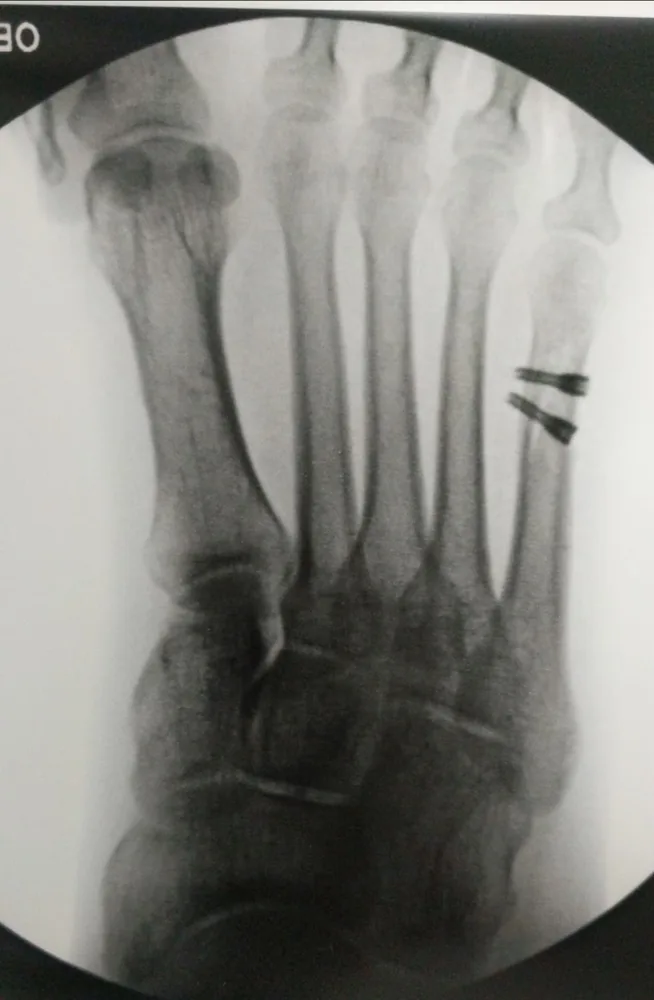
Pain is often centered across the top or middle of the foot and may worsen when standing, walking, or pushing off. Swelling can make it difficult to fit into normal footwear.
Bruising on the sole of the midfoot can be an important clue to a Lisfranc injury. Not everyone develops this sign, and its absence does not rule out ligament or joint damage.
A low-energy twist may create a ligament injury without an obvious fracture. More forceful trauma can cause bone breaks and joint displacement. Imaging and clinical examination help distinguish stable from unstable patterns.
Evaluation considers how the injury occurred, swelling, tenderness, circulation, and sensation. Weight-bearing X-rays may help when tolerated; CT can clarify fractures, while MRI may identify ligament damage.
Stable injuries may be treated with a cast or boot, a period without weight-bearing, and gradual rehabilitation. Recovery depends on the injury and follow-up findings.
Unstable or displaced injuries may require surgery to restore alignment, using fixation or, in selected cases, fusion. Recovery often includes extended protection from weight-bearing and a gradual return to activity.
A Lisfranc injury can resemble a routine sprain. Early assessment and avoiding weight-bearing help protect the midfoot while an appropriate treatment plan is established.
Seek emergency care for marked deformity, an open wound, increasing numbness, or a cold or discolored foot.
Yes. Some subtle injuries are difficult to identify on non-weight-bearing images. A clinician may recommend weight-bearing views when appropriate, CT, MRI, or specialist assessment if suspicion remains high.
No. Stable injuries without displacement may be treated with immobilization and non-weight-bearing care. Unstable or displaced injuries more often require surgical evaluation.
Recovery varies considerably. Many patients need weeks of protected or non-weight-bearing care, followed by gradual rehabilitation; more complex injuries or surgery may require months before fuller activity is possible.
Explore related foot conditions and treatments available at our Financial District practice. Select a topic below to learn about symptoms, evaluation, and treatment options.
Contact Manhattan Podiatry Group for assessment of a suspected midfoot injury with Dr. Mark Sharobeem, DPM.